各位作者、审稿专家:
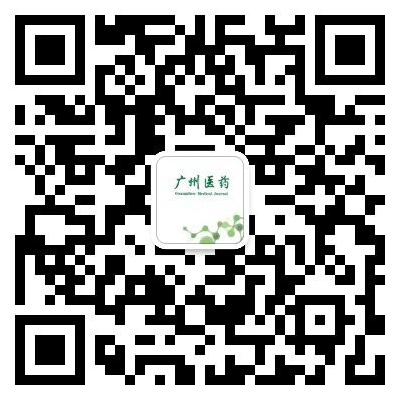
本刊官方微信服务号新增稿件状态查询服务,无需反复登录投稿系统,微信即可随时查看审稿进度、修回通知、录用结果,稿件更新实时推送提醒,同步接收期刊征稿、学术资讯。
微信搜索关注广州医药杂志服务号 → 点击菜单栏「绑定账号」→ 输入投稿邮箱完成账号关联;请关闭微信消息免打扰,避免遗漏稿件通知。
《广州医药》编辑部

目的 分析呼吸康复治疗对农村地区慢性阻塞性肺疾病(COPD)稳定期患者BODE评分系统的影响。方法 将我院收治的60例COPD稳定期患者作为研究对象,随机分为对照组与观察组,每组30例。对照组常规治疗,观察组则给予呼吸康复治疗方案。比较两组患者治疗前后BOBE评分系统的变化。结果 治疗后,观察组BMI、FEV1%、MMRC分级、6MWD分别为(22.4±1.1)kg/m2,(68.6±3.6)%,(1.3±0.2)级,(256.3±36.3)m,BODE指数评分降低至(3.4±1.0)分,ADL为(78.2±6.4)分,QOL为(67.8±2.6)分,与对照组相比差异有统计学意义(P<0.05);且观察组炎性因子水平下降幅度高于对照组(P<0.05)。结论 在农村地区COPD稳定期患者的临床治疗中,采用呼吸康复治疗方案,患者BODE评分系统指标改善显著,值得推广。
Objective To analyze the influence of respiratory rehabilitation treatment on BODE coring system of patients with chronic obstructive pulmonary disease (COPD) in stable phase in rural areas. Methods 60 patients with COPD in stable phase admitted into the hospital were selected as the research object and were randomly divided into control group and observation group with 30 cases in each. The control group received conventional treatment while the observation group received respiratory rehabilitation treatment. The changes of BOBE coring system in the two groups before and after the treatment were compared. Results After the treatment, BMI, FEV1% MMRC classification and 6MWD of the observation group were (22.4±1.1) kg/m2, (68.6±3.6)%, (1.3±0.2) and (256.3±36.3) m respectively. The BODE index score decreased to (3.4±1.0), ADL (78.2±6.4), and QOL (67.8 + 2.6).compared with those of the control group, the difference was statistically significant (P< 0.05). And the decline level of inflammatory factors in the observation group was significantly higher than that of the control group (P<0.05). Conclusion In the clinical treatment of patients with COPD in stable phase in rural areas, respiratory rehabilitation treatment were adopted, the improvement of BOBE coring system indexes is significant. It is worthy to be popularized.
目的 探讨综合康复训练对脑卒中后轻度认知障碍患者的应用效果及认知功能影响。方法 选取2022年2月—2023年2月暨南大学附属广州红十字会医院收治的80例脑卒中后轻度认知障碍患者展开前瞻性研究,应用抽签法将其分为综合康复组与常规组,各40例。常规组实施常规干预,综合康复组在常规组基础上增加综合康复训练,对比其认知功能,简易智能精神状态检查量表(MMSE)、美国国立卫生院卒中量表(NIHSS)评分变化,运动功能与平衡功能,日常生活能力与生活质量。结果 干预后综合康复组患者洛文斯顿作业疗法认知量表评分注意力为(3.36±0.42)分、思维运动为(17.34±2.31)分、定向力为(13.19±1.24)分,均高于常规组,且两组干预后高于干预前(P<0.05);干预后综合康复组患者MMSE评分为(25.58±4.12)分高于常规组,且两组干预后高于干预前,NIHSS评分为(14.53±2.62)分,低于常规组,且两组干预后低于干预前(P<0.05);干预后综合康复组患者Fugl-Meyer运动功能评定量表评分为(14.51±3.23)分、手臂动作调查测试表评分为(26.86±5.25)分、平衡量表评分为(43.06±5.13)分,高于常规组,且两组干预后高于干预前(P<0.05);干预后综合康复组患者日常生活活动能力量表评分为(53.02±4.43)分、脑卒中专用生活质量量表评分为(97.11±12.23)分,高于常规组,且两组干预后高于干预前(P<0.05)。结论 针对脑卒中后轻度认知障碍患者采取综合康复训练可促进患者认知功能恢复,提升患者运动功能及机体平衡功能,改善患者智力水平与神经功能,进一步提升患者日常生活能力与生活质量。
Objective To explore the effect of comprehensive rehabilitation training on cognitive function in patients with mild cognitive impairment after stroke.Methods A prospective study was conducted on 80 patients with mild cognitive impairment after stroke,who admitted to the hospital from February 2022 to February 2023.They were divided into a comprehensive rehabilitation group and a control group using a lottery method,with 40 patients in each group.The control group received routine intervention,while the comprehensive rehabilitation group received additional comprehensive rehabilitation training on the basis of the control group.Their cognitive function,Mini Mental State Examination Scale(MMSE),National Institutes of Health Stroke Scale in the United States(NIHSS)score changes,motor function and balance function,daily living ability and quality of life were compared.Results After intervention,the Lowenstein Occupational Therapy Cognitive Scale scores of attention(3.36±0.42),thinking and motor(17.34±2.31),and orientation(13.19±1.24)in the comprehensive rehabilitation group were higher than those in the control group,and both groups had higher scores after intervention than before(P<0.05).After intervention,the MMSE score(25.58±4.12)of patients in the comprehensive rehabilitation group was higher than that of the control group,and both groups had higher scores after intervention compared to those before intervention.The NIHSS score(14.53±2.62)was lower than that of the control group,and both groups had lower scores after intervention compared to those before intervention(P<0.05).After intervention,the Fugl Meyer Assessment score(14.51±3.23),Arm Movement Survey Test Form score(26.86±5.25),and Balance Scale score(43.06±5.13)in the comprehensive rehabilitation group were higher than those in the control group,and both groups had higher scores after intervention than before(P<0.05).After intervention,the Basic Activity of Daily Living score(53.02±4.43)and stroke specific quality of life score(97.11±12.23)in the comprehensive rehabilitation group were higher than those in the control group,and both groups had higher scores after intervention than before(P<0.05).Conclusions Comprehensive rehabilitation training for patients with mild cognitive impairment after stroke can promote cognitive function recovery,improve motor function and balance function,enhance intelligence and neurological function,and further improve daily living ability and quality of life.
目的 观察急性期脑卒中患者早期针刺结合康复训练的临床疗效。方法 采用单盲、分层、区组随机设计分组,随机分成针康组与康复组。针康组35例,康复组35例,按5 d为一个疗程,共4个疗程。采用Fug-Meyer运动功能评分法(FMA)、巴氏指数(BI)、脑卒中专用生活质量量表(SS-QOL)对治疗前及治疗后4周末、出院后8周末及随访期3个月、6个月末的死亡率、残疾率、复发率评估,比较两组的疗效。结果 两组基线比较差异无统计学意义(P>0.05)。组间比较:4周末 FMA、BI评分两组相比差异均无统计学意义(P>0.05),8周末则具有统计学意义(P<0.01)。SS-QOL评分在第4周末和第8周末相比差异无统计学意义(P>0.05)。随访3个月、6个月末的死亡率、致残率和复发率差异均无统计学意义(P>0.05)。组间多重比较,两组4、8周末 FMA、 BI和SS-QOL评分较治疗前比较差异有统计学意义(P<0.01)。针刺康复组8周末疗效优于4周末(P<0.01),康复组8周末与4周末相比差异无统计学意义(P>0.05)。针刺康复组4、8周末SS-QOL评分显著高于治疗前(P<0.01),8周末与4周末相比差异无统计学意义(P>0.05),康复组各时间点SS-QOL评分两两比较差异有统计学意义(P<0.01)。结论 对急性脑卒中患者进行早期针刺结合康复训练,可明显改善其肢体运动功能和日常生活活动能力。
Objective To observe the clinical efficacy of early acupuncture combined with rehabilitation training in acute-phase stroke patients.Methods Single-blind,stratified,zone group randomized design grouping was adopted,and randomly divided into acupuncture rehabilitation group and rehabilitation group.There were 35 cases in the acupuncture rehabilitation group and 35 cases in the rehabilitation group,received 4 courses,5 days in each course.Fugl-Meyer Assessment(FMA),Barthel Index(BI),Stroke Specific Quality of Life Scale(SS-QOL) scores and mortality,disability and recurrence rates at the end of 3 and 6 months of follow-up were used to compare the efficacy of the two groups.Results Comparing the basic conditions of the two groups,the difference was not significant(P>0.05).Comparison between groups:differences FMA and BI scores between two groups at the end of 4 weekends were not significant(P>0.05),while differences were significant(P<0.01)at the end of 8 weekends.SS-QOL scores at the end of 4 weekends and the end of 8 weekends were not significant different between two groups(P>0.05).Mortality,disability and recurrence rates at the end of 3 and 6 months of follow-up were not significantly different(P>0.05).Multiple comparisons between groups:there were significant differences in FMA,BI and SS-QOL scores at the end of 4 and 8 weeks between the two groups compared with the pre-treatment period(P<0.01).The efficacy of the acupuncture rehabilitation group at the end of 8 weekends was significantly better than that at the end of 4 weekends(P<0.01),and there was no statistically significant difference between the rehabilitation group at the end of 8 weekends and that at the end of 4 weekends(P>0.05).The SS-QOL scores at the end of 4 and 8 weekends in the acupuncture rehabilitation group were significantly higher than those before treatment(P<0.01),and there was no statistically significant difference at the end of 8 weekends compared with that at the end of 4 weekends(P>0.05),and there was a statistically significant difference in the two-by-two comparisons of SS-QOL scores at each time point in the rehabilitation group(P<0.01).Conclusions Early acupuncture combined with rehabilitation training for acute stroke patients can significantly improve their extremities motor function and daily vitality.
目的 评估医院-社区-家庭一体化康复护理模式对慢性创面患者生活质量及创面愈合的潜在影响。方法 选择2023年1月—2024年6月在广州市第一人民医院接受治疗的慢性创面患者80例作为研究对象,所有患者在住院期间均接受基于溃疡面积、深度及是否合并感染等因素的综合治疗,包括彻底清创、创缘处理、负压治疗、感染控制等治疗,并接受常规护理。出院前,通过随机数字表法将患者分为两组,每组40例。两组患者在住院期间均接受常规护理,出院后,对照组接受延续护理并定期复查。干预组40例患者在出院后接受医院-社区-家庭一体化康复护理模式。入组时及护理3个月后,使用生活质量调查表(SF-36)对患者生活质量和创面愈合率进行评估。结果 干预组创面愈合率为(32.61±4.26)%,高于对照组(11.48±1.04)%,差异具有统计学意义(t=19.473,P<0.05)。两组患者在护理3个月后的数字评定量表评分和创面疼痛频率评分均较入组时降低(P<0.05)。其中干预组护理3个月后的创面VAS评分为(1.82±0.17)分,创面疼痛频率评分为(1.28±0.25)分;而对照组分别为(3.91±0.22)分和(2.63±0.37)分,干预组低于对照组(P<0.05)。此外,干预组在护理后3个月的总体健康、生理功能、生理职能、精神健康、情感功能、社会功能评分均高于对照组(P<0.05)。在居家3个月期间,干预组的感染发生率为5.00%,而对照组为17.50%,干预组感染发生率低于对照组(χ 2 =3.781,P<0.05)。结论 本研究表明,医院-社区-家庭一体化康复护理模式干预能够促进慢性创面患者的创面愈合,降低居家期间感染的风险,并提升患者的生活质量。
Objective To assess the potential impact of the integrated hospital-community-home rehabilitation nursing model on the quality of life and wound healing in patients with chronic wounds.Methods A total of 80 patients with chronic wounds treated at the Guangzhou First People’s Hospital from January 2023 to June 2024 were selected as the study subjects.All patients received comprehensive treatment during their hospital stay,including thorough debridement,edge treatment,vacuum therapy,infection control and routine nursing care.Prior to discharge,the patients were randomly divided into two groups using a random number table,with 40 patients in each group.Both groups received routine nursing care during their hospital stay,and the control group received continuing nursing care and regular follow-up after discharge.Forty patients in the intervention group received the integrated hospital-community-home rehabilitation nursing model after discharge.Quality of life(QoL)and wound healing rates were assessed using the Short Form 36(SF-36)questionnaire at the time of enrollment and 3 months after nursing.Results The wound healing rate in the intervention group was significantly higher than that in the control group ([32.61±4.26]% vs [11.48±1.04]%),with a statistical difference(t=19.473,P<0.05).The numerical rating scale(NRS)scores and frequency of wound pain scores decreased in both groups 3 months after nursing compared to the enrollment period(P<0.05).Specifically,the VAS score for wound pain in the intervention group 3 months after nursing was(1.82±0.17),and the frequency of wound pain was(1.28±0.25),in the control group,these scores were(3.91±0.22)and(2.63±0.37),respectively,with the intervention group scoring significantly lower than the control group(P<0.05).Furthermore,the scores for overall health,physical function,role physical,mental health,emotional function,and social function in the intervention group were higher than those in the control group 3 months after nursing(P<0.05).During the 3-month home recovery period,the incidence of infection in the intervention group was 5.00%,whereas it was 17.50% in the control group,with the intervention group showing a lower incidence of infection(χ 2 =3.781,P<0.05).Conclusions This study demonstrates that the hospital-community-home integrated rehabilitation care model intervention can promote wound healing in chronic wound patients,reduce the risk of infection during home care,and significantly improve patients’ quality of life.