各位作者、审稿专家:
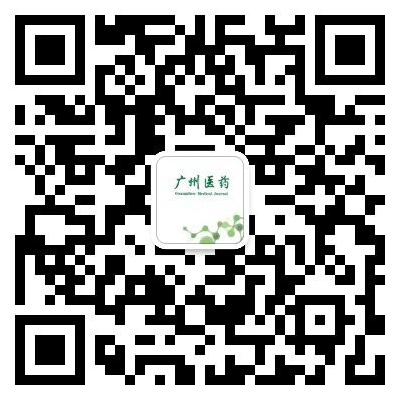
本刊官方微信服务号新增稿件状态查询服务,无需反复登录投稿系统,微信即可随时查看审稿进度、修回通知、录用结果,稿件更新实时推送提醒,同步接收期刊征稿、学术资讯。
微信搜索关注广州医药杂志服务号 → 点击菜单栏「绑定账号」→ 输入投稿邮箱完成账号关联;请关闭微信消息免打扰,避免遗漏稿件通知。
《广州医药》编辑部

目的 对川南地区重症专科联盟认知与需求进行调查,为该地区重症专科联盟建设提供参考。方法 采用分层随机抽样,在川南地区(乐山、宜宾、泸州、自贡)31个区县的二级医院内随机抽取213名医务人员作为调查对象。采用自制问卷收集调查对象基本情况,并评估其对重症医学专科联盟概念的认知情况,通过开放式问卷收集调查对象对重症医学专科联盟的需求。根据认知评估结果将研究对象分为了解充分组与了解不充分组,比较两组基本情况,并用多因素Logisitic回归筛选出独立性影响因素。结果 在纳入的213名医护人员中有68名(31.92%)对重症专科联盟了解不充分,单因素分析显示:两组在性别、年龄、工作岗位、职务及职称差异均具有统计学意义(P<0.05)。多因素Logistic回归分析显示:性别、学历为本科 、学历为博/硕士研究生、工作岗位、职务为中层干部、院领导职务及职称为川南地区重症专科联盟认知的独立性影响因素(P<0.05)。川南地区重症专科联盟需求排名前9位依次:派出专家技术指导、派出管理干部开展业务管理、接收联盟单位人员培训、协助开展新技术、为联盟单位成员开展培训与讲座、业务资源共享、接收联盟单位转诊、开展远程医疗、科研项目申报指导。结论 川南地区重症专科联盟认知情况主要与性别、学历、工作岗位、职务、职称及基层对于专家技术指导、管理干部业务指导及技能培训的需求较大。
Objective To investigate the awareness and demand for the Critical Care Specialty Alliance in Southern Sichuan,providing a reference for the development of the alliance in this region.Methods Using stratified random sampling,213 medical staff were randomly selected from secondary hospitals in 31 districts/counties of the Southern Sichuan region(Leshan,Yibin,Luzhou,Zigong)as survey subjects.A self-designed questionnaire was used to collect basic information from the respondents,assess their understanding of the concept of the Critical Care Specialty Alliance,and gather their demands for the alliance through open-ended questions.Based on the assessment results,respondents were divided into a well-informed group and a poorly informed group.The basic characteristics of the two groups were compared,and multivariate logistic regression was used to identify independent influencing factors.Results Among the 213 medical staff included in the study,68(31.92%)had insufficient understanding of the Critical Care Specialty Alliance.Univariate analysis revealed statistically significant differences(P<0.05)in gender,age,job position,administrative role,and professional title between the group with sufficient understanding and the group with insufficient understanding.Multivariate Logistic regression analysis showed that gender,undergraduate education,master’s/doctoral education,job position,middle management role,hospital leadership role,and professional title were independent influencing factors for the awareness of the Critical Care Specialty Alliance in the Southern Sichuan region(P<0.05).The top nine demands for the alliance in Southern Sichuan were dispatching experts for technical guidance,sending management cadres for operational management,providing training for personnel from alliance units,assisting in the development of new technologies,organizing training and lectures for alliance unit members,sharing business resources,accepting referrals from alliance units,implementing telemedicine,and providing guidance on research project applications.Conclusions Awareness of the Critical Care Specialty Alliance in Southern Sichuan is primarily associated with gender,educational background,job position,and professional title.There is significant demand at the primary level for expert technical guidance,operational management guidance from cadres,and skills training.