各位作者、审稿专家:
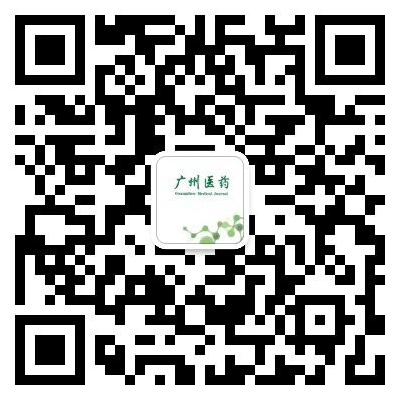
本刊官方微信服务号新增稿件状态查询服务,无需反复登录投稿系统,微信即可随时查看审稿进度、修回通知、录用结果,稿件更新实时推送提醒,同步接收期刊征稿、学术资讯。
微信搜索关注广州医药杂志服务号 → 点击菜单栏「绑定账号」→ 输入投稿邮箱完成账号关联;请关闭微信消息免打扰,避免遗漏稿件通知。
《广州医药》编辑部

目的 探讨肌少症性肥胖(SO)诊断标准的演进及其在中国老年人群中的本土化综合干预路径。方法 评述ESPEN/EASO最新共识,结合我国老年人代谢特征,系统分析“筛查-诊断-分期”流程及运动营养协同干预的临床效能。结果 SO诊断核心在于识别“隐性肥胖”,建议在AWGS2019标准基础上,叠加中国特异性腰围切点(男≥90 cm,女≥85 cm)或体脂率指标,并应用ALM/BMI校正肌肉质量。研究证实,以渐进式抗阻训练联合高蛋白营养(1.2~1.5 g·kg-1·d-1)为核心的协同模式,通过激活mTOR通路可显著逆转肌肉流失并改善胰岛素抵抗。融入八段锦等传统功法及乳清蛋白补充,能有效重塑中国患者“高碳水、低蛋白”的膳食习惯,提升依从性。结论 构建护士主导、社区依托的多学科管理模式,并借助远程健康工具实现闭环监测,是提升我国SO精准诊疗水平的关键路径。
Objective To explore the evolution of diagnostic criteria for sarcopenic obesity(SO)and its localized comprehensive intervention pathways tailored to the metabolic characteristics of the Chinese elderly population.Methods The latest ESPEN/EASO consensus was reviewed.Combined with the metabolic profile of Chinese older adults,the “screening-diagnosis-staging” workflow and the clinical efficacy of synergistic exercise and nutrition interventions were systematically analyzed.Results The core of SO diagnosis lies in identifying “hidden obesity.”It is recommended to incorporate Chinese-specific waist circumference cut-offs(male≥90 cm,female≥85 cm)or body fat percentage into the AWGS2019 framework,utilizing ALM/BMI for muscle mass calibration.Evidence suggests that a synergistic model,centered on progressive resistance training(PRT)and high-protein nutrition(1.2~1.5 g·kg-1·d-1),can significantly reverse muscle loss and improve insulin resistance by activating the mTOR pathway.Integrating traditional Chinese exercises(e. g. ,Baduanjin)and whey protein supplementation effectively reshapes the “high-carbohydrate,low-protein” dietary habits of Chinese patients,thereby enhancing intervention adherence.Conclusions Establishing a nurse-led,community-based multidisciplinary management model,integrated with digital health tools for closed-loop monitoring,is a pivotal strategy for enhancing the precision of SO diagnosis and treatment in China.
目的 研究在新型冠状病毒COVID-19疫情期间,政府采取的干预措施对医院检测的流行性感冒(简称流感)阳性率的影响,为制定流感预防措施提供依据,也为间接评价新型冠状病毒的预防效果提供参考。方法 回顾性收集广州市第一人民医院总院2018—2020年年廿三至正月十五期间的流感抗原检测数据,对政府干预前后的流感抗原检测阳性率进行分析比较。结果 在春节前后,2018年和2019年的流感检测阳性率总体上维持稳定。其中,2018年春节前后,流感阳性率在15.6%~46.5%范围内波动,2019年春节前后,流感阳性率在11.9%~30.4%范围内波动。2020年同期的流感阳性率变化曲线与前两年不同,在正月初四前曲线变化较为稳定,维持在20.0%~44.1%范围内。在正月初四后曲线呈现显著下降趋势,在正月十二和正月十五,流感检测阳性率变为0。进一步的分析表明,政府干预对流感阳性率的影响无性别差异,对5~64岁人群效果最佳。结论 当前针对新型冠状病毒COVID-19的政府干预措施能显著降低流感阳性率,预防流感的发生,也为预防同样以呼吸道传播为主的新型冠状病毒的传播提供了间接证据。
Objective The aim of the study was to study the effect of government interventions on the positive rate of influenza detected in Guangzhou First People's Hospital during the outbreak of COVID-19, and to provide a basis to develop prevention measures against influenza and a reference for the indirect evaluation of the preventive effect of COVID-19. Methods Influenza antigen detection data of Guangzhou First People's Hospital were collected retrospectively from 23rd of the 12th lunar month to 15th of the 1st lunar month in 2018—2020, and the positive rates of influenza antigen detection before and after the government intervention were analyzed and compared. Results The positive rates of influenza were generally stable in 2018 and 2019 before and after the Spring Festival, where the positive rate fluctuated in the range of 15.6%~46.5% in 2018, and the positive rate fluctuates in the range of 11.9%~30.4% in 2019. The temporal change of the positive rate in 2020 was different from that of the previous two years. The positive rate curve was relatively stable before the fourth day of the first lunar month, maintaining a range of 20.0%~44.1% in 2020. After the fourth day of the first lunar month, the curve showed a significant downward trend. On the 12th and 15th day of the first lunar month, the positive rate of influenza became 0. Furthermore, the effect of government intervention on the positive rate of influenza showed no gender difference, and the effect was significant for people aged 5~64 years. Conclusion The current government intervention measures against COVID-19 could significantly reduce the positive rate of influenza, prevent the occurrence of influenza, and provide indirect evidence for the prevention of the spread of COVID-19, which was also mainly spread by respiratory tract.
目的 探讨基于微视频的护理干预对急性胰腺炎患者疾病知晓、自我管理和遵医行为的影响。方法 根据中心随机法将郑州大学第二附属医院2021年1月—2023年1月收治的88例急性胰腺炎患者作为研究对象,其中传统组44例给予常规干预,微视频组44例在传统组的基础上结合微视频的护理干预,比较两组患者疾病知晓情况、自我管理能力和遵医行为情况。结果 干预2个月后,微视频组病例脱落3例,传统组病例脱落4例,两组疾病知晓各维度高于干预前,且微视频组高于传统组,其中疾病病因(t=3.151,P=0.003)、临床症状(t=7.165,P<0.001)、并发症(t=5.497,P<0.001)、如何预防疾病复发(t=8.195,P<0.001);两组自我护理能力量表(ESCA)各维度评分高于干预前,且微视频组高于传统组,其中各维度评分结果为自我护理技能(t=2.787,P=0.007)、自我概念(t=2.272,P=0.026)、自护责任感(t=2.644,P=0.011)、健康知识水平(t=3.321,P=0.001);两组遵医行为各维度评分高于干预前,且微视频组高于传统组,其中各维度评分结果为饮食依从性(t=6.271,P<0.001)、用药依从性(t=3.539,P=0.001)、锻炼依从性(t=4.469,P<0.001)、定期复查(t=2.764,P=0.007)。结论 通过运用微视频的护理干预能够提高急性胰腺炎患者疾病知识的掌握,促进机体自我管理水平的恢复,进而提高遵医行为。
Objective To explore the impact of micro video based nursing interventions on disease awareness,self-management and compliance behavior in patients with acute pancreatitis.Methods According to the central randomization method,88 patients with acute pancreatitis admitted to the Second Affiliated Hospital of Zhengzhou University from January 2021 to January 2023 were selected as the research subjects.Among them,44 patients in the traditional group received routine intervention,and 44 patients in the micro video group received nursing intervention combined with micro video on the basis of the traditional group.The disease awareness,self-management ability and compliance behavior of the two groups of patients were compared.Results After two months of intervention,three cases were dropped out in the micro video group and four cases were dropped out in the traditional group.The disease awareness in both groups was higher than that before intervention,and the micro video group was higher than the traditional group,including disease etiology(t=3.151,P=0.003),clinical symptoms(t=7.165,P<0.001),complications(t=5.497,P<0.001) and how to prevent disease recurrence(t=8.195,P<0.001).The scores of ESCA in both groups were significantly higher than those before intervention,and the micro video group was higher than the traditional group in terms of self-care skills(t=2.787,P=0.007),self-concept(t=2.272,P=0.026),self-care responsibility(t=2.644,P=0.011) and health knowledge level(t=3.321,P=0.001).The scores of all dimensions of compliance behavior in both groups were significantly higher than those before intervention,and the micro video group had higher scores than the traditional group in terms of dietary compliance(t=6.271,P<0.001),medication compliance(t=3.539,P=0.001),exercise compliance(t=4.469,P<0.001) and regular follow-up(t=2.764,P=0.001).Conclusions The use of micro video nursing interventions can improve the mastery of disease knowledge in patients with acute pancreatitis,promote the recovery of the body’s self-management level,and thereby improvemedical compliance behavior.